
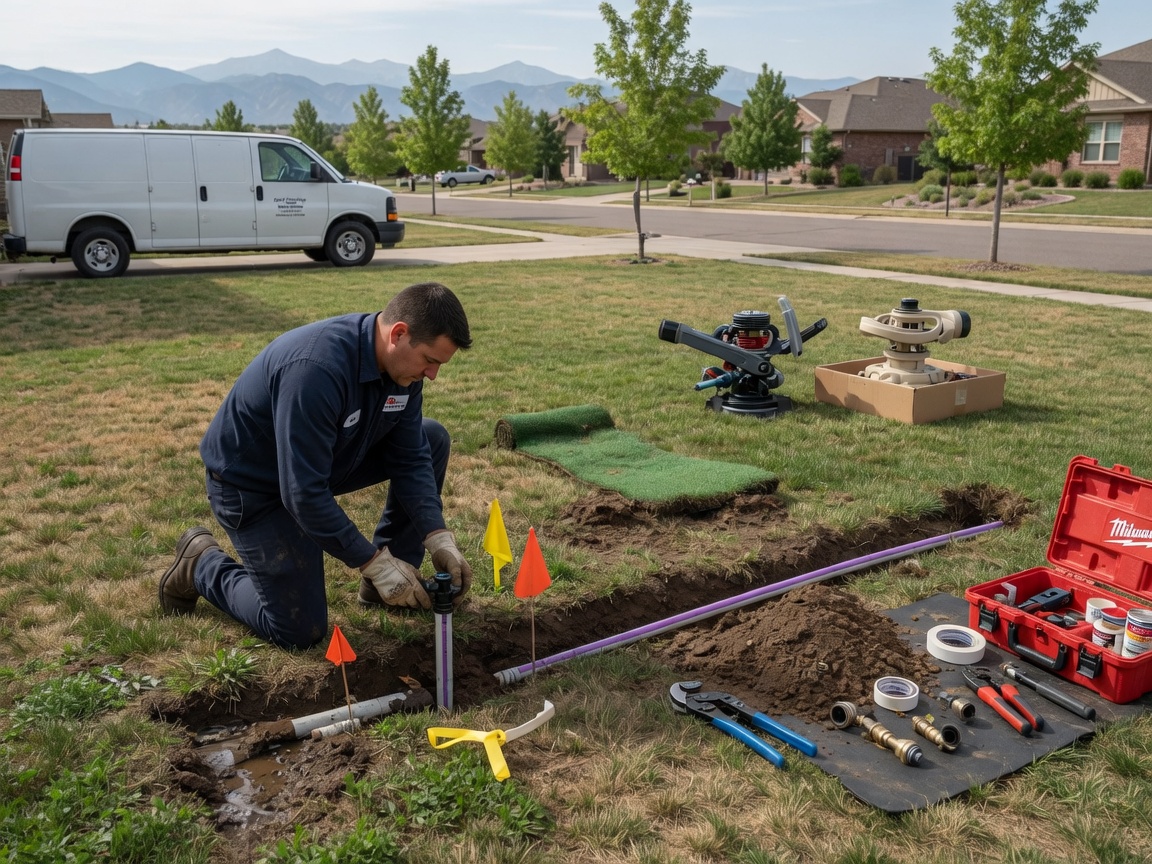
An irrigation system works hard for about half the year and sits exposed to freezing weather for the rest. Sprinkler repair means diagnosing why zones are not running, heads are broken or pressure is low, and fixing it so your lawn gets even coverage. Fall winterization, including a sprinkler blowout, keeps next spring's repairs smaller.
Common problems include heads that do not pop up or spray unevenly, zones that will not turn on, wet patches where water pools, dry spots, geysers from broken heads and a controller that runs at the wrong time. Look for sunken wet ground over buried lines, which often indicates a break. In spring, pressurizing the system often reveals damage from the previous winter.
Northern Colorado winters make blowouts a seasonal essential. Water left in lines expands when it freezes, cracking pipe, valves, heads and backflow assemblies, and the damage only shows up when the system is turned back on. A blowout uses compressed air to push water out of every zone before the first hard freeze, typically in October. Scheduling in the fall rush can be tight, so earlier is easier.
For repair, we walk the system zone by zone, checking heads, nozzles, valves, wiring and the controller. We look for the cause of poor coverage, such as clogged nozzles, broken risers, low pressure or a failed diaphragm in a valve, and explain what needs replacing. Where adjustments will fix it, we say so. Backflow testing is part of the picture too: the device protects your drinking water, and many water providers require regular testing.
To prepare, locate the controller and note which zones are not working or where you see wet spots. Mark broken heads with a flag if you can find them. Before a blowout, clear the area around the backflow device and your main irrigation shutoff, and disconnect hoses from outdoor spigots.
A little attention during the season prevents bigger repairs. Watch the system run in the morning or evening so you can spot misaligned heads, overspray onto sidewalks and soggy areas that suggest leaks. Adjusting the schedule for cooler weather saves water, and replacing worn nozzles restores even coverage. Because lawns in northern Colorado depend on irrigation through hot, dry summers, a failed zone can brown out grass quickly, so calling when you first notice a problem is usually better than waiting for the damage to spread.
Call us in spring when you start the system and find problems, in summer when coverage fails, and in the fall before your first expected freeze for winterization. Leaving a blowout until the weather turns often means working around a cold snap or a long waiting list. Booking the blowout and the spring start-up together is a simple way to keep the whole season on one schedule.
Technician insight
Sprinkler problems in this area follow the calendar. Spring brings cracked heads and valve leaks from winter, July brings overworked systems and clogged nozzles, and October brings a rush of blowouts before the first freeze. Backflow assemblies sit above ground and are often the first thing to crack in a hard freeze, so insulating or draining them properly matters.
Sprinkler Repair Services We Offer
✓Sprinkler Repair
Broken heads, leaking valves, zone failures, controller faults and coverage problems.
✓Sprinkler Blowout
Compressed-air clearing of all zones before the first hard freeze.
✓Sprinkler Winterization
Shutting down and protecting the system, including the backflow assembly, for winter.
✓Spring Start-up
Turning the system on, checking each zone and catching winter damage early.
✓Backflow Testing
Testing the backflow preventer that protects your drinking water from irrigation.
How it works
- 1
Walk the zones
We run each zone in turn and note what is spraying, leaking or not coming on.
- 2
Diagnose the cause
We check heads, valves, wiring and pressure to find why a zone is failing.
- 3
Repair or blow out
We make the repairs or, in fall, blow the lines out with compressed air zone by zone.
- 4
Test and note
We re-run the system or confirm the lines are clear, and report any further concerns.
Pricing
Cost depends on the number of zones, the nature and number of repairs, access to valves and the backflow device, and whether the work is a repair, a blowout or a testing visit. We explain the scope after we have looked at the system.